

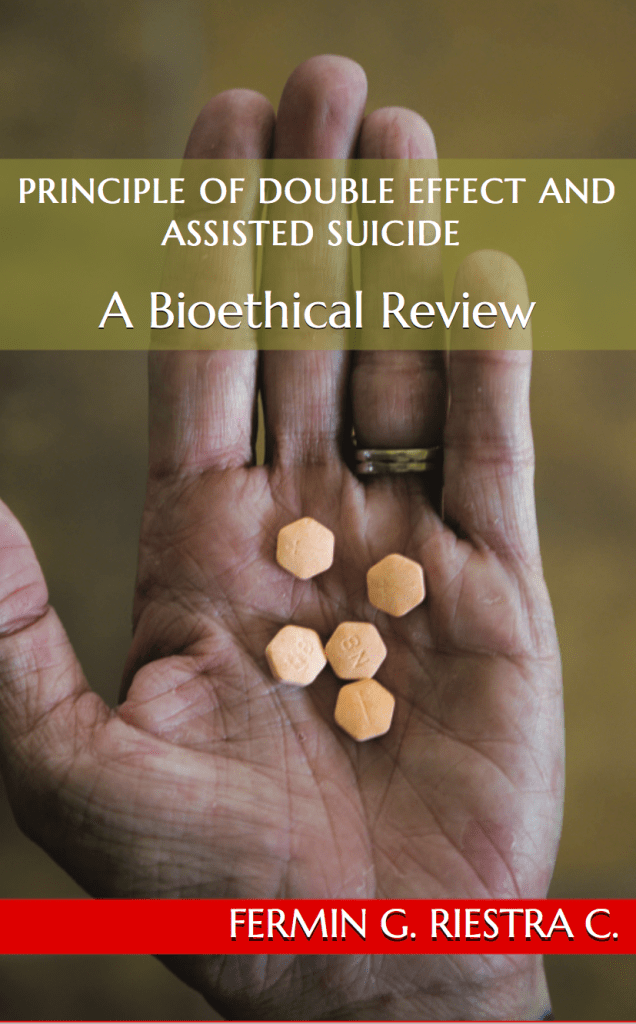
Bioethics is a field of study that examines the ethical, social, and legal implications of the life sciences and healthcare. One of the most prominent concepts in bioethics is the Principle of Double Effect, which has been widely debated by philosophers, ethicists, and medical professionals for centuries. In this dissertation, we will explore the Principle of Double Effect in a historical perspective and its relevance to the issue of assisted suicide.
The Principle of Double Effect was first introduced by Thomas Aquinas in the 13th century. It refers to the idea that an action that has both good and bad effects can be ethically justified if the good effect is intended, and the bad effect is merely a foreseen but unintended consequence. The Principle of Double Effect has evolved over time, with modern philosophers and ethicists like Kamm and Gury providing their own definitions of the concept.
In the medical sector, the Principle of Double Effect has been used as a basis for ethical decision-making. For example, it is often used to justify the administration of pain relief to terminally ill patients, even if it may hasten their death. In policy-making, the Principle of Double Effect has been used to shape laws regarding euthanasia and assisted suicide.
Assisted suicide is a highly controversial topic that has been the subject of intense debate in recent years. Some argue that individuals have the right to choose how they die, while others believe that it goes against the sanctity of life. In chapter two of this dissertation, we will explore the debate surrounding the lawfulness of assisted suicide, regardless of the Principle of Double Effect.
In the final chapter, we will converge the Principle of Double Effect with the issue of assisted suicide. We will examine various viewpoints on the matter, including those of advocates and opponents of assisted suicide. Real cases from countries that allow assisted suicide, such as Belgium and Oregon, will be used as examples to demonstrate the different connotations that the practice may have in society.
The Belgium case will be used to explain the consequences that the country has experienced, particularly in cases where assisted suicide has not been a voluntary practice, and where physicians have taken decisions to end the lives of their patients. On the other hand, the Oregon case will be used to highlight the “Death with Dignity Act,” which is considered a pioneer in the subject of assisted suicide in the United States.
In conclusion, this dissertation examines the Principle of Double Effect in a historical perspective and its significance in the medical sector and policy-making. We have explored the debate surrounding the lawfulness of assisted suicide and used real cases to illustrate the different connotations that it may have in society. By converging the two terms, we hope to provide insight into the bioethical considerations that arise in this complex issue.
Keywords:
- Principle of Double Effect
- Assisted Suicide
- Bioethics
- Ethical review
- Medical ethics
- Philosophy
- Lawfulness of Assisted Suicide
- Real cases of Assisted Suicide
- Belgium case
- Oregon case
- Death with Dignity Act
- Tomas Aquinas
- Legitimization of Assisted Suicide
 Online University Press